
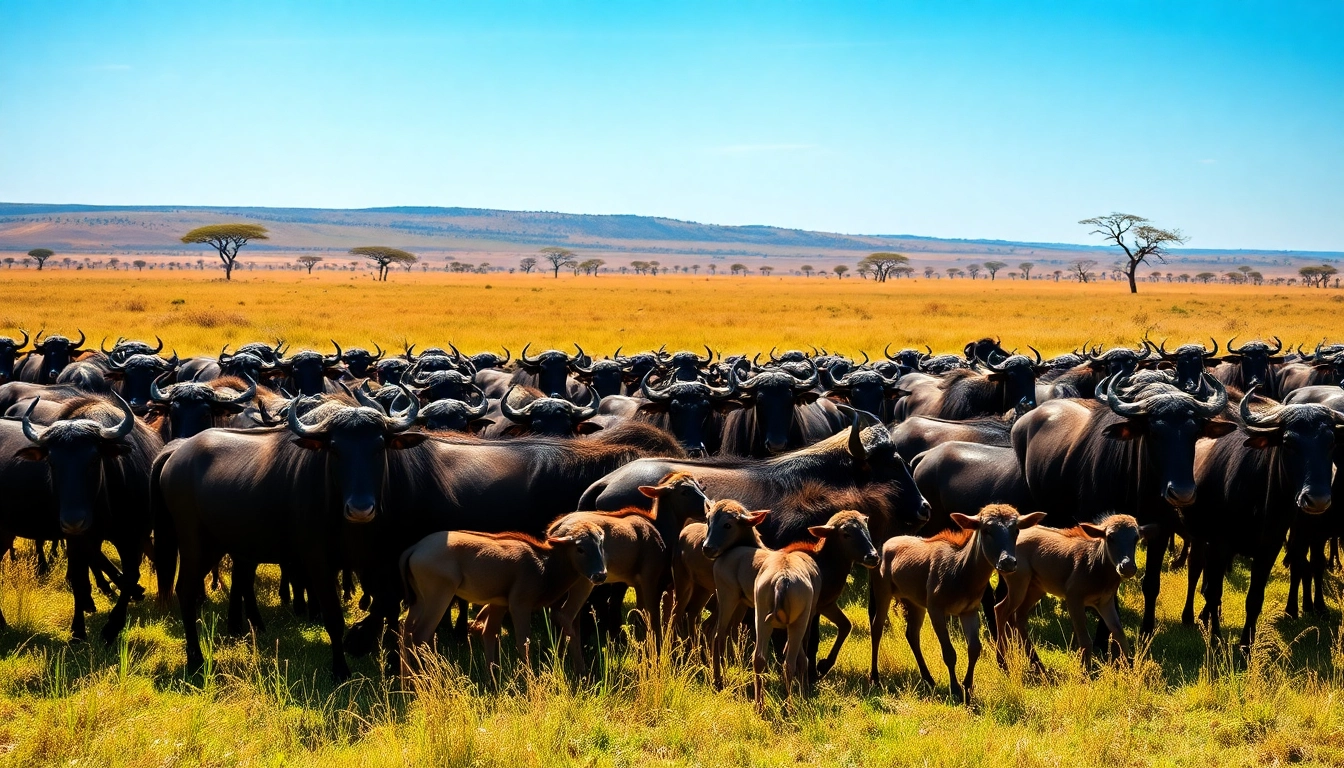

Understanding the Wildebeest Calving Season Safari
The Wildebeest Calving Season Safari offers an unparalleled opportunity to witness one of nature’s most extraordinary spectacles. Each year, thousands of wildebeests migrate to the lush plains of the Serengeti to give birth, showcasing a dramatic event rich in emotions and ecological significance. Joining a Wildebeest Calving season safari allows travelers not only to witness birth but also to observe the challenges these young animals face in a predator-rich environment.
What is the Wildebeest Calving Season?
The wildebeest calving season typically occurs between late January and early March. During this period, approximately 500,000 calves are born over a span of just a few weeks, resulting in a veritable baby boom. The vibrant grasslands of the Serengeti provide essential nutrients to the nursing mothers and their newborns, allowing calves to gain strength quickly. This natural phenomenon is closely tied to the annual migration cycle of the wildebeests, driven by the search for food and water.
The Importance of Timing for Safaris
Timing is crucial when planning a safari during the calving season. Tourists aiming to witness the birth of wildebeest calves should be aware that the timing can vary slightly each year due to environmental conditions such as rainfall patterns. The early weeks of March are often the most fruitful for spotting newborns and observing mother-calf interactions. Failure to visit during this peak calving window may result in missing the chance to see these adorable creatures.
Other Wildlife Events During Calving Season
While the focus is on the wildebeest calving season, this period also triggers a flurry of activity among other wildlife species. Predators, such as lions and hyenas, are drawn to the calving grounds, as the abundance of vulnerable young wildebeests presents ample hunting opportunities. Additionally, this is an essential time for other migratory animals such as zebras, which often accompany the wildebeests during their journey across the plains. The interplay of life and death during this season adds an enriching layer to the safari experience.
Best Locations for the Wildebeest Calving Season Safari
Top Areas in the Serengeti
The Serengeti is vast and diverse, but certain areas stand out as prime locations for witnessing the wildebeest calving season. The Southern Serengeti, particularly around Ndutu and the Ngorongoro Conservation Area, is renowned for its fertility and abundance of wildflowers during this time. Here, herds gather in dramatic numbers, creating a breathtaking sight against a backdrop of sweeping savannah. Other notable calving areas include the Simiyu and Ngorongoro Crater regions, where the landscape is equally magnificent.
Choosing the Right Safari Tour Companies
Selecting a reputable tour company can significantly enhance your safari experience. Look for companies that specialize in wildlife safaris and have a proven track record of success during the calving season. Read reviews, check itineraries, and inquire about the guides’ expertise and knowledge of animal behavior. An experienced guide can provide invaluable insights, increasing the likelihood of seeing significant wildlife events during your trip.
Accommodation Options Near Key Locations
Accommodations range from luxurious lodges to more rustic tented camps, allowing you to choose a setting that fits your budget and comfort level. Many lodges in the Ndutu area offer close proximity to the calving grounds, enabling you to start your day early for optimal wildlife viewing. Additionally, mobile camps can move with the herds, offering a unique chance to experience the Serengeti’s beauty up close. Consider amenities, reviews, and experiences shared by previous guests when making your choice.
Planning Your Wildebeest Calving Season Safari
Best Time to Visit the Serengeti
The best time to visit the Serengeti for the wildebeest calving season is from late January to early March. This period ensures travelers will have the highest chance of experiencing the birth of calves and the accompanying wildlife interactions. However, it’s essential to keep an eye on annual weather patterns, as fluctuating rainfall can lead to slight variations in calving times. Planning ahead—especially booking your safari during this peak window—is advisable to secure desirable accommodations and tour options.
What to Pack for a Safari Adventure
Packing wisely is crucial for maximizing your safari experience. Essential items include binoculars for wildlife viewing, a quality camera for capturing stunning images, sunblock, insect repellent, and appropriate clothing. Lightweight, breathable fabrics are ideal for warm days, while layering is essential for cooler evenings. Shoes should be comfortable for walking, and a good hat and sunglasses protect against the sun. Don’t forget a reusable water bottle to stay hydrated while minimizing plastic waste.
Health and Safety Tips for Travelers
While embarking on a safari can be thrilling, it’s essential to prioritize health and safety during your trip. Ensure you are up to date on vaccinations and have any necessary medications for common ailments such as malaria. It is advisable to drink only bottled or boiled water, adhere to guide recommendations, and maintain a respectful distance from wildlife to prevent dangerous encounters. Travel insurance is also recommended, providing peace of mind in the event of unexpected situations.
Photography Tips for the Wildebeest Calving Season Safari
Essential Gear for Capturing the Moment
For wildlife enthusiasts, photography is a vital part of the safari experience. Using a DSLR or mirrorless camera with interchangeable lenses can improve your ability to capture stunning images. A telephoto lens is particularly useful for wildlife photography, allowing you to shoot from a safe distance. Additionally, a sturdy tripod or monopod can help stabilize your shots for clearer images, especially in low lighting conditions during dawn or dusk.
Best Practices for Wildlife Photography
Practicing good wildlife photography techniques can make a significant difference in the quality of your images. Patience is key; wait for the right moment to capture the most compelling action. Familiarize yourself with your camera settings so you can adjust them quickly based on lighting and movement. Focus on capturing the behaviors and interactions between animals, reflecting the emotional intensity of the calving season, rather than just posed pictures.
Creating Lasting Memories Through Images
Photography is not just about taking pictures; it’s about creating lasting memories. When you return home, consider compiling your best shots into a scrapbook or travel album, which allows you to revisitate your safari experience. Sharing your images with friends and family or on social media can inspire others to explore the incredible beauty of wildlife and the importance of conservation. Remember to reflect on your journey and the stories behind each photograph; these memories will enrich your life for years to come.
FAQs About the Wildebeest Calving Season Safari
When does the wildebeest calving season occur?
The wildebeest calving season typically takes place from late January to early March, with the peak usually occurring in February.
How can I watch the calving events without disturbing wildlife?
Choose guided tours led by experienced wildlife guides who prioritize ethical viewing practices, maintaining a safe distance from animals.
What wildlife can be seen during the calving season?
Besides wildebeests, expect to see predators such as lions, hyenas, and cheetahs, as well as zebras, gazelles, and various birds.
Are there guided safaris specifically for calving season?
Yes, many tour companies offer specialized guided safaris during the calving season, focusing on maximizing wildlife sightings.
What is the average cost for a wildebeest calving season safari?
Prices for guided safaris can vary widely, ranging from $200 to $600 per day, depending on the tour company, accommodations, and length of stay.