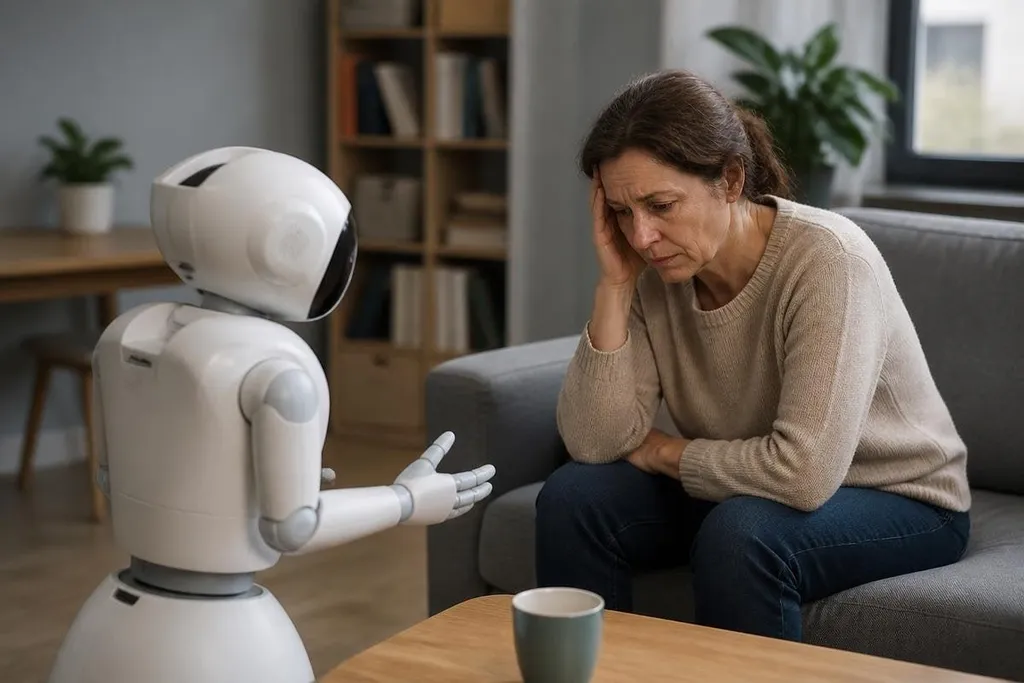
A robot can detect a raised voice, a tense face, or a change in heart rate. It can then choose words and actions that look caring. That may help in care work, education, and customer service, but it doesn't prove the robot feels anything.
- Robots can detect signals linked to distress.
- A useful response can be planned without feelings.
- Trust depends on clear limits, privacy, and human oversight.
What empathy means in a robot
People use “empathy” for several different abilities. One ability is noticing another person's state. Another is working out what that state may mean. The third is responding in a way that helps.
Software can handle these parts separately. Cameras may read facial movement, while a microphone measures changes in speech speed and pitch.
A wearable sensor may send heart rate data. The robot can combine those inputs and estimate whether someone may be tired, upset, or in pain.
That estimate is a guess based on signals. A quiet person may be calm, worried, or ill. A smile may show happiness, politeness, or discomfort. The same signal can mean different things across people and cultures, so a robot needs context and a way for the person to correct it.
A caring response can be programmed
Suppose a home robot hears a person say they feel unwell. It could ask a follow-up question, lower its speaking volume, call a family member, or suggest human help. Each step can follow a rule or a trained model without the robot having an inner feeling.
This distinction matters because people may treat a smooth response as proof of concern. The robot may say “I’m sorry,” pause at the right moment, and remember a past conversation. Those actions can make an interaction easier, yet the system may be matching patterns rather than sharing the person's experience.
Its body differs from a human body. It can measure temperature, pressure, or pulse, but those readings are inputs. They don't tell us that the robot feels fear, grief, relief, or pain.
I'd call this simulated empathy until a robot can show more than a well-timed response.
That doesn't make the response useless. A system that notices distress early and gets a nurse, parent, or operator involved may help someone. The benefit comes from the action and its timing, not from a claim about the robot's inner life.
Where the risks start
The first risk is false confidence. If a robot labels a person as angry when they are tired, its next action may make the situation worse. A care robot that misses pain can delay human attention, especially when a person has trouble speaking.
Privacy is another concern. Emotional signals can come from microphones, cameras, wearables, and stored conversations. A buyer needs to know what the robot records, where the data goes, how long it stays there, and who can review it.
The design should also give people control. They need a visible way to stop recording, correct a wrong guess, and reach a human. Those controls matter more than a friendly voice or a face on a screen.
Emotion words are easy to add to a demo, but a buyer needs evidence of what the robot did after a person corrected it. Robot24.com reports can place that claim beside the robot, setting, and recorded response before you judge whether the system read the person or guessed.
A practical test for buyers and builders
Use this checklist before treating a robot's response as empathy:
- Name the signal: Check whether the system uses words, facial movement, voice, pulse, or another input.
- Check the error path: Find out what happens when the robot reads the person wrongly.
- Keep a human route: Confirm that a person can take over without arguing with the system.
- Ask about records: Read the policy for audio, video, health data, and conversation storage.
- Separate response from feeling: Judge the robot by what it does, not by its voice or face.
A robot may become better at reading context and choosing helpful actions. That progress could make daily tasks safer and less lonely for some people. The question of machine feeling stays open, and responsible products should say so plainly.
For now, judge robotic empathy by its signals, its errors, and the human help it brings in when the guess is wrong.